

Ants in Jena: Not Every Species Is a Problem
Be vigilant, yes—but please don’t panic. That’s the advice from the city of Jena regarding ants.
Since problems with ants in downtown Jena—particularly in the Damenviertel neighborhood—were first reported last year, there has been an increasing number of reports of noticeable ant activity—now also coming from other parts of the city and, in some cases, even from natural areas.
However, not every ant is a problem. There are more than 110 native ant species in Germany. Among the better-known ones are, for example, wood ants, knotted ants, and red ants. They are a natural part of our environment and play important roles in the ecosystem.
It’s true that native ants often find their way into houses or apartments while searching for food. In most cases, however, they do not cause any major problems. Anyone who still feels bothered by ants can contact a professional pest control company. They can also assess whether the ants might be a protected species, the removal of which requires official permission.
Invasive Species Causes Problems
The “problem ants” in downtown Jena, however, are an introduced species: the Forgotten Way Ant (Lasius neglectus). Its native range is in the Near East.
Unlike native species, the Forgotten Road Ant can form so-called supercolonies. These consist of several hundred ant colonies comprising millions of individual ants.
Although the ants are not immediately dangerous to humans or pets, their massive numbers can make them very bothersome and can also cause damage—for example, to streets and sidewalks, buildings, or electrical distribution boxes.
The Forgotten Road Ant is one of the smaller ant species. It measures about 2.5 to 3.5 millimeters in length and is dark to blackish-brown in color. However, only experts can reliably distinguish it from similar species.
Study to Assess Spread
Following confirmation of the species, the Department of Urban Development and Environment commissioned a specialized consulting firm. The goal of the study is to determine the actual extent of the spread as well as the main areas of occurrence within the city of Jena.
To this end, so-called bait traps will be used in accordance with scientific methods.
Targeted Control Is Only Possible Through Collaboration
The results of the study will help to take more targeted and better-coordinated action against the ants in the future. Close cooperation between private property and real estate owners and public institutions will be crucial in this regard. Control measures must be coordinated in terms of timing and location to ensure they are as effective and sustainable as possible.
The costs for measures on private properties are generally borne by the respective owners themselves. The city covers the costs for municipal buildings and areas as well as public streets.
Special bait gels and bait granules are used for control and are applied by specialized companies. The active ingredients are carried by the ants into their underground nests and passed on to the queens and brood there.
How Citizens Can Help
Anyone who notices a conspicuous ant infestation in their neighborhood and suspects it might be the invasive species can collect a few specimens in a small, tightly sealable container and drop them off at the Department of Urban Development and Environment, Am Anger 26.
Please be sure to include the following information:
- exact location
- Date of discovery
- Name of the person who found them
- Contact information for follow-up questions
The samples will be provided to the contracted expert assessment firm and can provide important insights into the spread of the colonies.
No anonymous reports in the defect reporting system
Anonymous reports submitted via the defect reporting system without supporting samples, however, are not helpful. The forgotten garden ant and efforts to control it present a complex challenge and cannot be resolved in the short term with isolated measures.
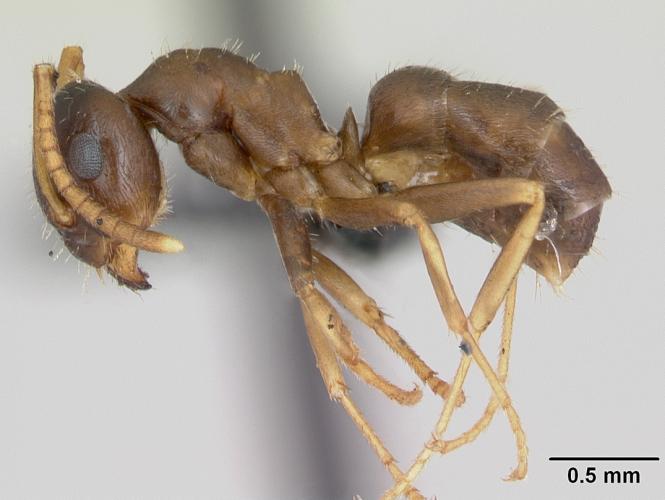
Die problematische Vergessene Wegameise
© AntWeb - CC BY 4.0
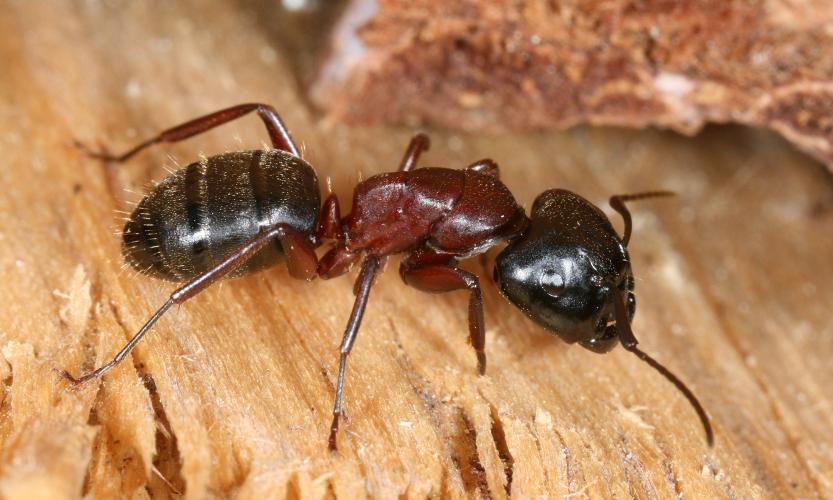
Eine einheimische Roßameise
© Richard Bartz/ Munich Makro Freak - CC BY-SA 2.5
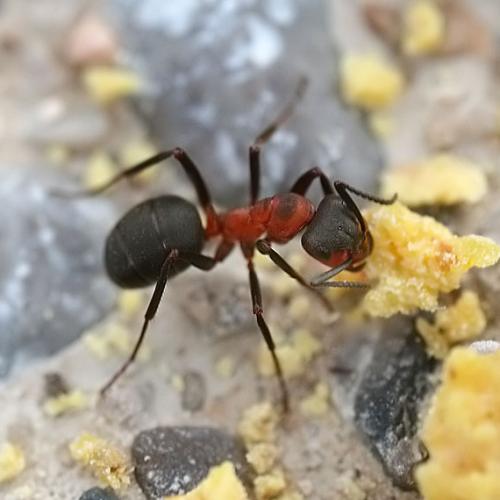
Einheimische Rote Waldameise
© Richard Bartz/ Munich Makro Freak - CC BY-SA 2.5


