

Pilot phase for measuring foot traffic is being evaluated
The pilot phase for measuring foot traffic in downtown Jena is nearing completion. Since spring, various technical methods for anonymously tracking foot traffic under real-world conditions have been tested at three central downtown locations: Johannisstraße, Kirchplatz, and the Markt. With the pilot phase ending on June 30, the evaluation of the results is now underway.
The goal of this subproject within the Jena Smart City Project is to better understand how the downtown area is used and, in the long term, to establish a monitoring tool for data-driven downtown development. The collected data is intended to show how heavily individual areas are used at different times and how, for example, events, construction sites, or other changes affect visitor flows.
The tests included a Wi-Fi-based pedestrian counting system as well as LiDAR and radar object counters. The methods differ in terms of range, accuracy, data analysis, and ongoing operating costs, among other factors. A key finding from the pilot phase: No single technology provides equally good answers to all questions. For long-term use, therefore, the right combination of different methods is essential—tailored to the specific use case and the associated costs.
“A vibrant downtown needs good ideas, committed stakeholders, and a solid understanding of how people actually use it,” says Mayor and Head of Digitalization Benjamin Koppe. “Anonymized foot traffic measurement helps us better understand how individual areas of our downtown are used. This allows us to specifically improve the quality of the experience, identify untapped potential, and evaluate the impact of events, construction sites, or other changes in a more transparent way. Pedestrian traffic measurement does not replace political decision-making, but it makes decisions more well-founded, transparent, and verifiable.”
Dorothea Prell, overall project manager of the Jena Smart City project, adds: “With all the systems tested, the focus is not on individual people, but exclusively on anonymized and aggregated data regarding foot traffic and movement patterns. From the very beginning, it was important to us to provide open information, take data protection issues seriously, and explain the initiative through dialogue. After all, a Smart City is created through collaboration between the urban community, the business sector, and the administration.”
Before the start of the pilot phase, the city of Jena hosted a public information event at the Jena Digital Innovation Hub on February 11, 2026. There, around 30 citizens learned about the goals, technology, data protection, and potential applications of pedestrian traffic measurement. Questions regarding the project’s continuation, possible operating models after the project’s conclusion, and a future expansion to other areas of the city were also discussed.
Technical and expert support was provided, among others, by the Fraunhofer IOSB INA. Also involved are the city’s Urban Development Department, Jena Economic Development, Jena Municipal Services, JenaKultur, and the Initiative Innenstadt Jena e. V.
“The pilot phase was crucial for comparing the different systems under real-world conditions,” emphasizes Heike Stötzner, subproject manager in the Urban Development, Environment, and Transportation action area of the Jena Smart City Project. “We are now carefully evaluating data quality, technical reliability, and practical usability. Only then can we decide which method is suitable for Jena in the long term and what a possible continuation might look like.”
Pedestrian traffic measurement is part of the Jena Smart City Project within the “Urban Development, Environment, and Transportation” action area. In the future, the collected data is intended to help highlight developments in the city center and better support urban development decisions—for example, regarding quality of life, pedestrian routes, or events.
For more information on the Jena Smart City Project, visit: smartcity.jena.de
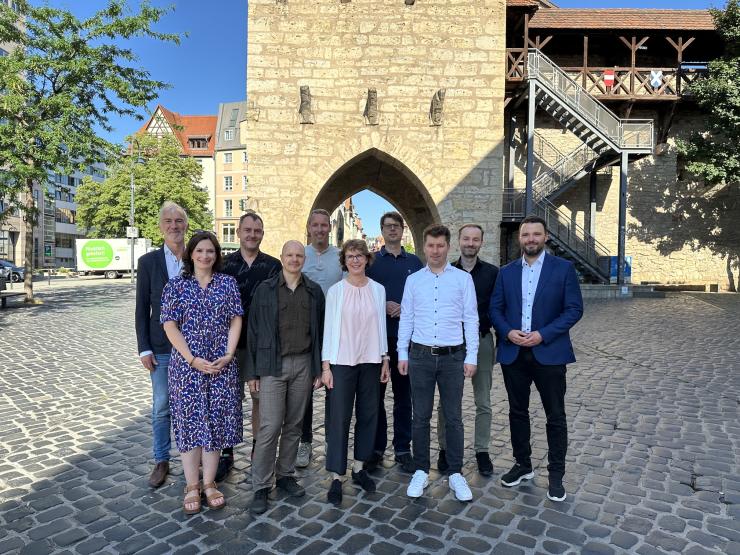
Am Standort Johannisstraße, im Bild: Bürgermeister Benjamin Koppe (ganz rechts) , Dorothea Prell (vorn links) und Heike Stötzner (vorn Mitte) mit weiteren beteiligten Partne
© Stadt Jena